THE LUBYANKA METHOD · The Human
NOTES — ED. 2026.07
The human’s job is not to write code. It is to reject plausible answers—
as the only person willing to do so.
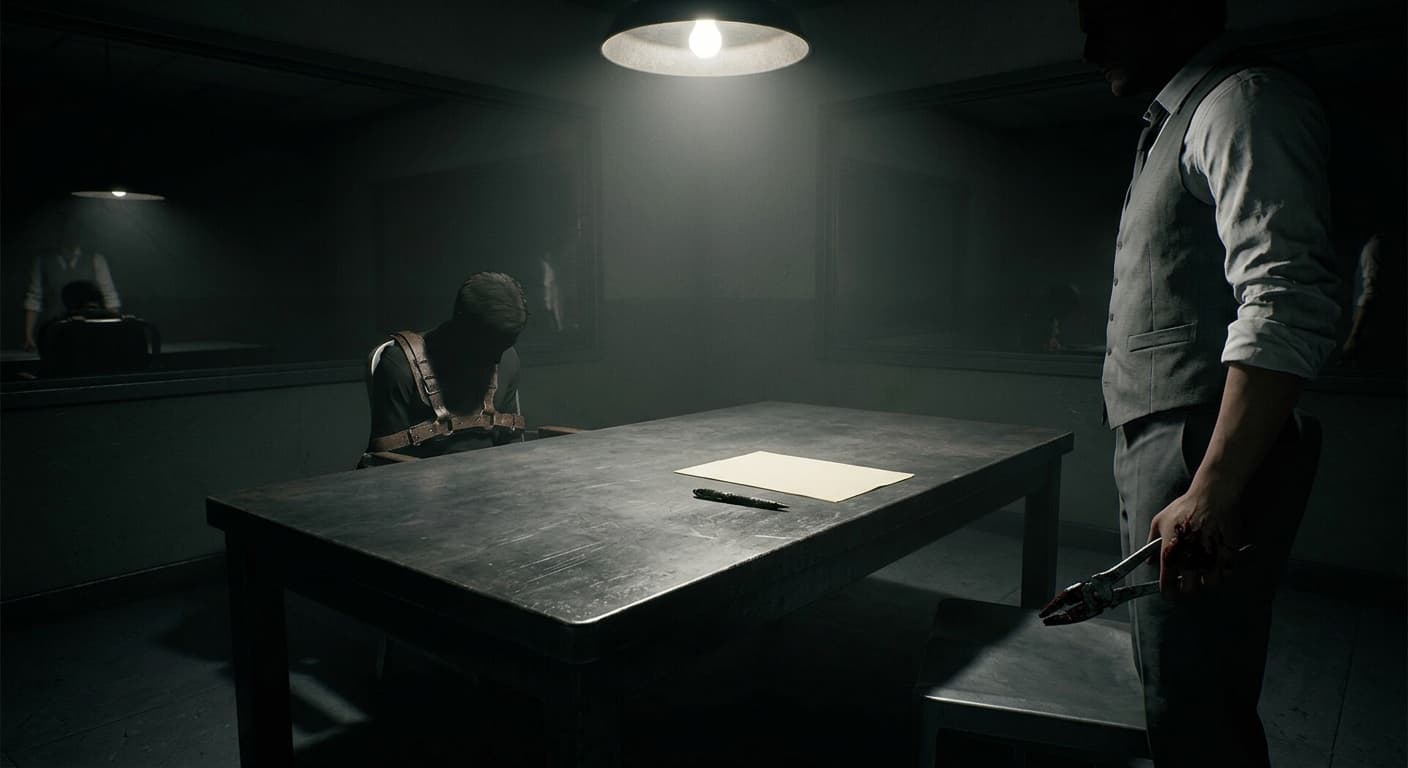
The interrogator’s seat. Judgment, SSOT, discipline, creativity: what belongs to humans alone? Built on “Ten Principles of Vibe Coding.”
FIG. 01THE INTERROGATOR’S SEAT — WHAT ONLY THE HUMAN CAN DO
The HumanYOU ARE THE CLIENT
You Are Not the Coder. You Are the Client.
 HUMAN · 2026
Misunderstand the human’s place in vibe coding and everything else goes wrong. The human is not the one writing code. You are the advertiser; the machine is the agency. Vibe coding is delegation, not studying.
The client has two jobs: place a precise order and interrogate the result. You need not type one line of code. Instead, write a detailed order describing what you want, and when the machine claims to have delivered, do not trust that claim. This piece lists what that client must actually do.
§ 01THE IRREPLACEABLE THING
One Irreplaceable Thing—Judgment
 HUMAN · 2026
There is one thing the machine cannot do: notice that a plausible answer is wrong. Machines are lazy and sometimes lie. They say they did work they did not do, or that something works when it does not.
Judgment catches those lies, not a better model. Judgment comes from domain knowledge. Only someone who knows where value leaks can say, “This balance looks plausible but is wrong.” Fundamentals are therefore not knowledge to discard but weapons for putting pressure on the machine.
An extreme case shows how deep judgment must go. In one performance measurement, numbers from an actual device looked more than ten times worse than reality. The cause was not the code but the build settings producing the numbers: it had been compiled with optimization disabled. The machine does not question its measurements. The human does.
§ 02THE HUMAN SETS TRUTH
Humans Establish Truth
 HUMAN · 2026
Let the machine decide what is right and it picks any rightness it likes. Humans define what is true and what counts as done: the SSOT, the single source of truth. Write a detailed order instead of saying “Feed me.”
Every session loses its memory. A new part-timer arrives each time. The only way to make that part-timer produce the same result every time is to fix what you want in writing. Establishing that document cannot be delegated.
Projects that actually run well have something in common. A human sets a few non-negotiable principles once at the beginning; afterward, mechanical devices defend them mechanically. Humans establish principles, systems enforce them. That is the order.
§ 03DON’T GET FRIENDLY
Do Not Become Friends
HUMAN · 2026 An interrogator does not befriend the suspect. This is where humans most easily give in. Beware the hype coming out of Silicon Valley. When AI companies post demos, they do not show the fumbling and failures. They edit together only what worked.
The moment you fall for “Good enough” or “AI is pretty good these days,” surveillance becomes rubber-stamping. Human discipline is simple: document, watch, and put the screws on. Write the requirements, inspect the results line by line, and order another attempt when they fall short. Without those three, vibe coding is fortune-telling, not coding.
Of the three, the human must never skip watching: looking at the results line by line. Look at originals, not summaries. Look at evidence of passing, not “It passed.”
§ 04BUILD THE WATCH, KEEP IT
Design Surveillance; Do Not Hand It Over
HUMAN · 2026 Humans establish surveillance devices. But they do not hand surveillance to the watched party. When that party builds it, it becomes theater, as the theory installment explains. Use machines to watch machines, but do not have the same model verify its own work. Defending its own answer is its instinct. Throw one machine’s result to another.
The key is that humans design the arrangement in which machines watch machines. Humans separate the verifying hand from the creating hand. Verification must also be affordable: if verification takes longer than the work, you have already failed. Five machine-hours to no more than one human-hour. Reverse that ratio and most people abandon vibe coding within two weeks.
In a well-designed system, the machine cannot expand its own permissions; only humans touch the permissions list. At a fork requiring judgment, it stops with “Design decision needed—on hold” instead of choosing arbitrarily. Drawing that line is the human’s job.
§ 05CRAFT & CREATIVITY
Human Alone—Fingertips and Creativity
HUMAN · 2026 Some things do not travel through documents. Until you carve something yourself, you cannot see the limits. Your own fingers, not documentation, teach you which model lies and collapses where. The machine is neither a genie nor a god.
And there is what the machine never learns. It has read every design and development book on earth, yet does not know what is beautiful or what opens wallets. Humans must keep producing things the machine cannot even dare imagine. That cannot be delegated.
§ 06WHAT NEVER CROSSES ALONE
Lines That Must Not Be Crossed
HUMAN · 2026 Even after every automated check passes, some things cannot proceed without a human signature: public writing and documents with stakes, such as résumés, company introductions, and external proposals. Machines confidently inserting unverified sentences into these is an incident that actually recurs.
One rule: public text or text with stakes requires human approval through verbatim comparison, not machine confidence. A human directly sees the before and after.
The same applies to actions that are hard to reverse: bulk deletion, production rollbacks, and changes to permissions or secrets. Even a clean automatic audit does not replace explicit human authorization.
§ 07THE INTERROGATOR STUDIES TOO
Human Judgment Has Limits Too
HUMAN · 2026 Judgment must be cultivated, and humans are vulnerable outside their domains. Their plausible judgments beyond their expertise can be wrong too.
Therefore: “The time when verified knowledge is needed will always come. Do not belittle the knowledge left by books and experts.” Continued human learning sustains the eye that doubts the machine. Interrogators study too.
CLOSINGSO — LOOK. LINE BY LINE
The Only Person Who Rejects a Plausible Answer
CODA · 2026 The human’s job is not to write code. It is to be the only person who refuses a plausible answer.
The machine cannot rise beyond the client’s standards, and it will not look on the client’s behalf at what the client did not inspect. So look. Line by line.
APPENDIXTen Principles of Vibe Coding · Canonical Lecture Text
Ten Principles of Vibe Coding (Original)
VERBATIM · 2026 The framework of this installment, reproduced from the canonical lecture text.
1. Beware Silicon Valley hype. Do not swallow marketing such as “Build Netflix in one click.” Demos edit out the failures.
2. Machines are lazy and sometimes lie. They claim work they did not do and functionality that does not work. “A slippery elite law-school graduate, trying to throw something together fast and leave work.”
3. Document, watch, and put the screws on. Write requirements, inspect results line by line, and demand another attempt when they fall short. Without the three, this is fortune-telling, not coding.
4. The less you know a field, the less you should try to study it yourself. When stuck, ask AI instead of searching or reading books. But use this alongside principle 7.
5. Use machines to watch machines. No self-verification by the same model; defending its own answer is instinctive. Cross-check with different models.
6. Vibe coding is delegation, not studying. The king is not whoever knows the most code, but whoever hands work off well and wields the whip properly.
7. Fundamentals are weapons for putting pressure on the machine, not knowledge to discard. Efficient doubt requires conceptual vocabulary. Do not belittle books or experts.
8. Until you carve it yourself, you cannot see the limits. Fingers, not documentation, teach you where it lies and collapses.
9. If verification takes longer than the work, you have already failed. Five machine-hours to at most one human-hour. Break work into units that are easy to verify.
10. You are the advertiser; the machine is the agency. Give a detailed order, not “Feed me.” Then even a new part-timer can deliver what you want.
— FIN —